
Key Takeaways
- Contact lenses sit on the thin layer of tears that coats your eye, so they can affect how moist your eyes feel.
- Gritty, burning, or red eyes that feel worse later in the day can point to dryness from your lenses.
- Lens age, material, fit, and blocked oil glands all play a part in comfort.
- Rewetting drops, warm compresses, and short breaks can help you feel better.
- Eye doctors in Collingwood can check your fit and help you find lenses that work.
By the end of a long day, your contacts can feel scratchy and your eyes might look a little red. That gritty, tired feeling leaves many people wondering whether their lenses are behind it. Our team at Collingwood Optometry & Cwood Eyecare hears this question often, and a few small changes can often bring back your comfort.
Contact lenses can contribute to dry eye, but they don’t have to leave your eyes uncomfortable. With the right lens fit, simple habits, and support for dry eye, you can keep wearing your contacts and feel good doing it.
How Contact Lenses Affect Your Eyes
Your eyes stay comfortable thanks to a thin layer of tears, called the tear film, that keeps the surface smooth and moist. When you pop in a contact lens, it floats right on top of that layer.
Soft lenses need moisture to stay soft, so they can pull a bit of that surface wetness from your eyes as you wear them. Every time you blink, the lens moves slightly and creates a little friction against your eye. Most days, you never notice it, but that small tug can add up when your eyes are already low on tears.
Signs Your Contacts Dry Out Your Eyes
Dryness rarely shows up all at once. It usually creeps in over the day and starts to nag at you.
Here are common signs to watch for:
- A feeling like there’s an eyelash or bit of grit stuck in your eye
- Burning, watery eyes, or redness that lingers
- Symptoms that feel worse late in the afternoon or evening
When Symptoms Get Worse
Your surroundings can make dry eyes feel sharper. Dry, dusty, or smoky rooms pull moisture from your eyes faster, and a heated home in winter can do the same.
Long wear also adds up. Once you pass the 4-hour mark, your lenses have had more time to soak up moisture, so that late-day scratchy feeling makes sense.
What Contributes to Dryness for Contact Lens Wearers
A few things can leave your eyes feeling parched, and the lens itself is often the first place to look. Older lenses that you reuse for weeks tend to collect deposits and hold less water than fresh daily disposables, which start clean each morning.
Your eyelids matter too. Tiny oil glands along the edge of your lids release oil that keeps tears from drying up too quickly. When those glands get blocked, tears evaporate faster, and your eyes feel dry.
The material and fit of your lenses round out the picture. A lens that sits too tight or is made from a material that holds little water can leave your eyes wanting more moisture through the day.
How to Relieve Dry Eyes from Contacts
Small changes often make a real difference. Switching to a lens made from a material that holds more water, or moving to daily disposables, can help your eyes feel fresher.
Preservative-free rewetting drops add moisture back while your lenses are in, so keep a bottle handy at your desk or in your bag. For blocked oil glands, a warm compress held over closed eyes for a few minutes can soften the oil and help it flow again.
The 20-20-20 Rule for Screens
Staring at a screen means you blink less, and fewer blinks mean drier eyes. This simple habit gives your eyes regular breaks:
- Every 20 minutes, pause what you’re doing
- Look at something about 20 feet away
- Rest your eyes on it for 20 seconds
Should You Take a Break from Contacts?
You don’t always need to give up your lenses. Short breaks during the day can ease the strain and let your eyes recover.
Adjusting your wear schedule, like slipping into glasses in the evening, can also keep you comfortable without losing the freedom your contacts give you.
When to See Your Eye Care Team in Collingwood
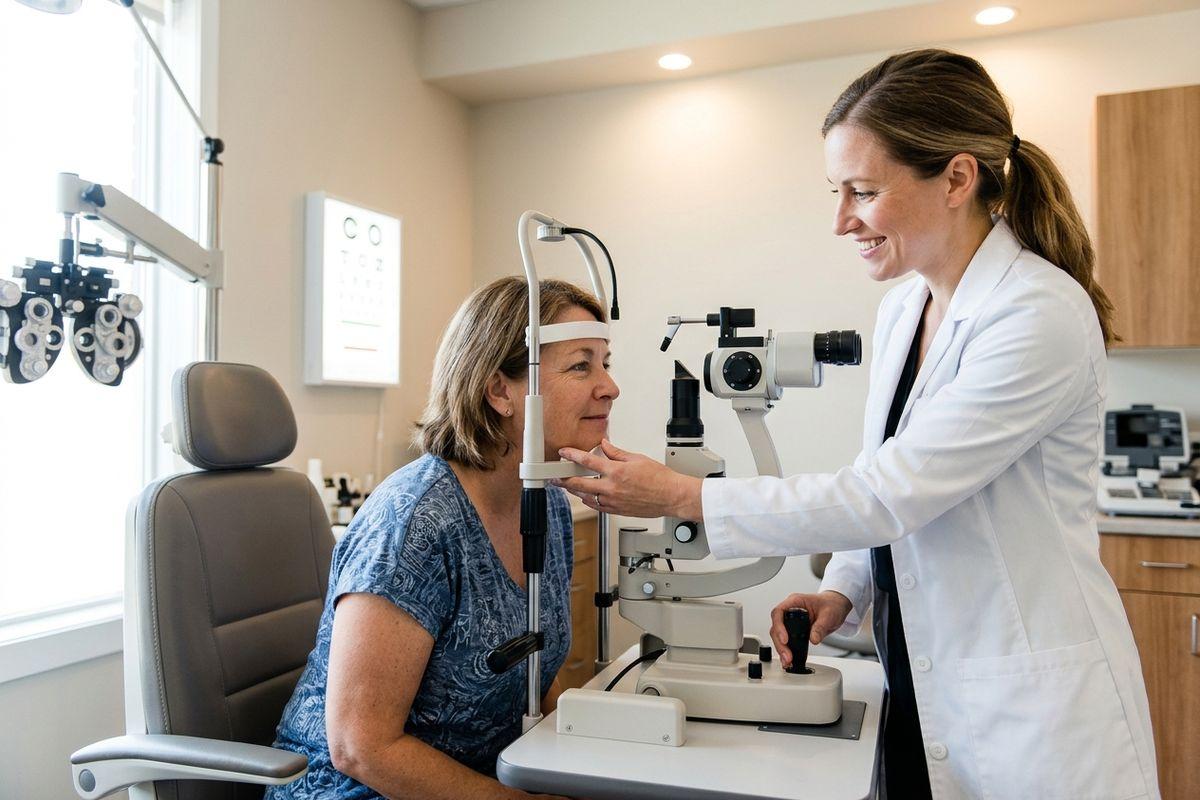
If discomfort or redness sticks around no matter what you try, it’s worth having your eyes looked at. Ongoing dryness can point to something our team in Collingwood can help you sort out.
Regular checkups can also catch small problems before they grow, and custom lens fittings can match your eyes with a lens that feels right from morning to night.
If your contacts leave your eyes feeling dry, our team at Collingwood Optometry & Cwood Eyecare can help you find a comfortable fit. Book your appointment today and see how good your lenses can feel.