
Key Takeaways
- The bacteria linked to a stye can pass between people, so avoid sharing towels, pillowcases, or eye makeup.
- A stye usually shows up as a red, tender bump along the edge of the eyelid.
- A warm compress a few times a day can help a stye drain and feel more comfortable.
- IPL may be recommended for some people with recurring styes or blocked oil glands.
- Book a visit if the bump lasts more than a week or starts to affect your vision.
You wake up, look in the mirror, and notice a sore red bump near your eyelashes. It stings when you blink, and now you are wondering if you can pass it to your kids or your partner. That small bump is likely a stye, and it brings up a fair question about whether it can spread to the people around you.
A stye forms when a small oil gland along your eyelid gets blocked, and bacteria collect inside. Those bacteria live on the skin and can move to another person through shared items or direct contact.
However, you’re unlikely to spread a stye just by sitting near someone. The risk goes up when you share things that touch your eyes or face. Wash your hands often, skip the eye makeup until the bump clears, and keep your own towel and pillowcase. Those small steps help protect the people you live with while your eyelid heals. If your stye doesn’t clear up or you develop other symptoms, it is a good idea to see our team.
What a Stye Feels Like
A stye tends to announce itself. Common signs include:
- A red, swollen bump on the upper or lower eyelid.
- Tenderness or a dull ache when you touch the area.
- A gritty feeling, as if something is stuck in your eye.
- Watering or light sensitivity in the affected eye.
- A small yellow spot at the centre of the bump as it comes to a head.
Most styes stay on the surface and clear within a week or two. If the swelling spreads across the eyelid or your vision changes, that is worth a closer look.
Can an Optometrist Treat a Stye?
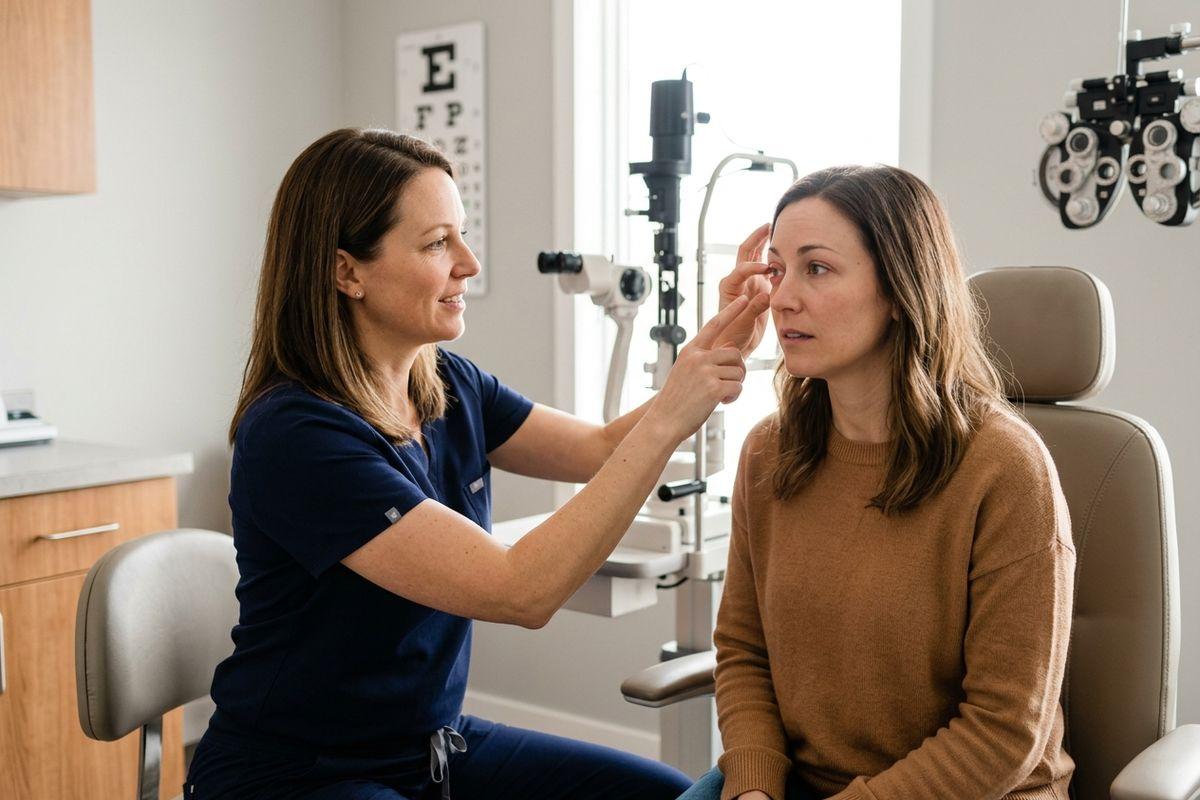
Yes. An optometrist can examine the bump, confirm it is a stye, and rule out other eyelid conditions that look similar. That check matters because a lump that will not drain may need different care.
Depending on what the exam shows, your eye doctor may drain a stubborn stye, prescribe an antibiotic ointment or drops, or recommend warm compresses paired with gentle lid cleaning.
For people with recurring styes or blocked oil glands, IPL (intense pulsed light) therapy may also be an option. IPL can help support healthier oil gland function and may be recommended as part of a broader treatment plan. Our team can also spot patterns, such as recurring blocked glands, and help you manage them.
Home Care for a Stye
Most styes respond well to steady home care, including warm compresses.
Apply a warm compress to your closed eyelid for 5 to 10 minutes, 3 or 4 times a day. The warmth can soften the blockage and encourage the gland to drain naturally.
Resist the urge to squeeze or pop the bump, since that can push bacteria deeper and spread them along the lid. Keep the area clean, and skip makeup and contact lenses until the stye clears. A little patience usually pays off.
When to See Your Eye Doctor in Collingwood
Home care handles many styes, but some situations call for a professional look. Reach out if the bump grows, sticks around longer than a week, or keeps returning.
You should also book a visit if the swelling spreads to the whole eyelid, your vision blurs, or the pain gets worse instead of better. These signs can point to an infection or a blocked gland that needs hands-on treatment. A quick eye exam can give you answers and a clear plan.
Care for Your Eyes
A stye is common, treatable, and rarely serious, yet it helps to have someone check it when it lingers or keeps coming back. Our caring team at Collingwood Optometry can examine your eyelid, treat the bump, and share simple habits to lower the chance of another one. Book an appointment today and give your eyes the attention they deserve.