Key Takeaways
- Age, some medicines, health conditions, and your surroundings can all play a part in dry eyes.
- Preservative-free drops are a gentler choice if you use drops more than 3-4 times a day.
- Gels and ointments can help with severe dryness, especially at bedtime.
- Check labels for redness relievers, harsh preservatives, and contact lens safety.
- An eye exam can help match the right drops or prescription treatment to your type of dry eye.
The Right Drops Depend on Your Situation
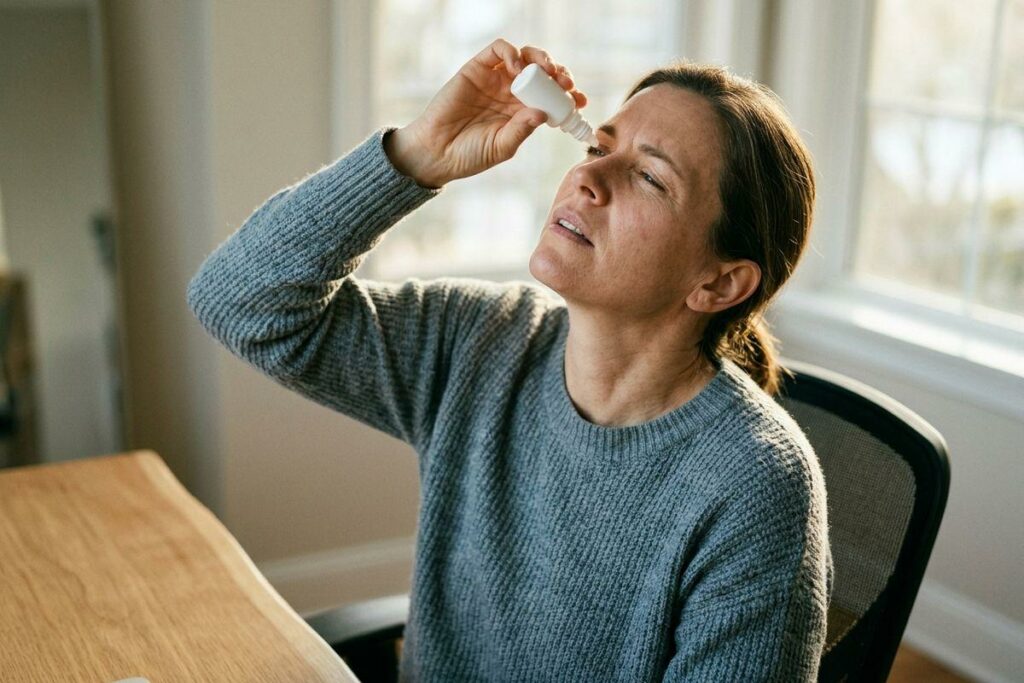
You reach for the little bottle on your desk, apply eye drops, and blink a few times, but your eyes still feel gritty by mid-afternoon. Or maybe the wind on a ski day at Blue Mountain leaves your eyes stinging the whole drive home. Our team at Collingwood Optometry hears about similar problems often from people across the region.
No single eye drop works for everyone, so the right drop for your situation depends on how often you use drops, how dry your eyes feel, and what’s behind your dryness. If store-bought drops aren’t giving you enough relief, our dry eye treatment service can help you find a plan built around your eyes.
What Can Lead to Dry Eyes?
Dry eyes rarely come down to one thing. The following factors can all contribute to dry eyes:
- Getting older and taking certain medicines, like allergy pills or diuretics.
- Health conditions such as rheumatoid arthritis, lupus, or Sjogren syndrome.
- Eye surgery, smoky rooms, or windy weather.
Knowing what’s at play helps you and your eye doctor pick drops that suit your situation.
What Types of Eye Drops Help Dry Eyes?
Dry eye products come in a few main forms, and each one fits a different level of dryness and a different routine.
Artificial Tears with Preservatives
These are the drops you’ll usually see in multidose bottles on store shelves. One bottle lasts a while and tucks easily into a purse or ski jacket pocket.
The catch is the preservatives. If you use these drops often throughout the day, the preservatives may irritate your eyes.
Preservative-Free Drops
These drops have fewer additives and often come in small, single-dose vials that you twist open and toss after use. Although, some companies also now produce preservative free drops in multi-use bottles as well.
If you use drops more than three or four times a day, preservative-free options are usually a good choice, as they tend to be gentler on moderate or very dry eyes.
Gels & Ointments for Severe Dryness
When drops don’t feel like enough, gels and ointments offer a thicker formula. However, they may blur your vision for a short while after you put them in.
That’s why ointments often work well right before bed, when a little blur doesn’t get in your way.
Which Ingredients Should You Look For?
Look for these helpful ingredients in your eye drops:
- Hyaluronic acid is a moisture booster that helps your eyes hold water.
- Carboxymethylcellulose is a soothing coating that forms a light shield over your eye.
- Mineral oil is a sealant that slows your tears from drying out.
- Trehalose protects the cornea and promotes healing.
Some drops combine more than one of these, so read the full list before you choose.

What to Check on the Label Before You Buy
A quick look at the label can help you avoid drops that don’t suit your eyes. Watch for these details on the box:
- Redness relievers may lead to rebound redness when you use them regularly.
- Benzalkonium chloride is a preservative that may irritate your eyes with long-term use.
- If you wear contacts, the label should confirm that the drops can be safely used with lenses.
If you’re not sure about a bottle of drops you already own, bring it to your next visit, and our team can look it over with you.
When to See Eye Doctors in Collingwood for Dry Eyes
Signs It’s Time for an Eye Exam
Sometimes, eye drops can’t provide relief. In these cases, or if you notice any of the following, you should book an eye exam:
- You’ve tried several drops, gels, or ointments without relief.
- Your dryness persists or worsens.
- New symptoms appear alongside the dryness.
No single brand works for every type of dry eye. Our team can take a close look at your eyes and your tear film in order to help match drops to your situation.
Prescription Drops for Long-Term Dryness
For dryness that sticks around, your optometrist may suggest prescription drops. Cyclosporine and lifitegrast can help keep inflammation in check.
An eye doctor often pairs these drops with simple eyelid hygiene and preservative-free tears. Together, this combination can support more comfortable eyes, from morning coffee to evening reading.
Find Dry Eye Relief Close to Home
The right eye drop is the one that suits your eyes, your routine, and the type of dryness you have. Collingwood Optometry has cared for families in Collingwood, Blue Mountain, Nottawa, and Bateau for over 55 years, and our team can help you sort through your options without the guesswork.
Book a dry eye appointment today, and take the next step toward comfortable eyes, whether you spend your day on screens or out on the trails.